
By Meredith Biesinger, Magnolia Tribune
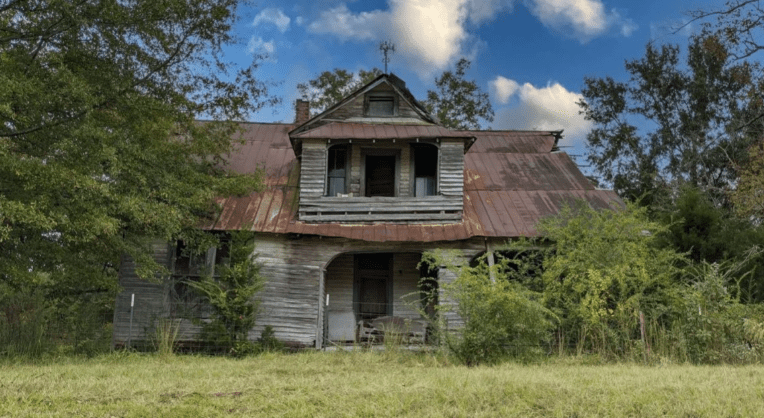
(Photo from The Forgotten South)
There’s an old farmhouse near Brandon that locals can’t seem to forget.
If you drive that stretch of road long enough, someone will eventually point it out. “That’s the old Whitley place,” they’ll say. For decades—ever since the late 1950s—people have slowed their cars as they pass it, studying the sagging porch and weathered siding. Some remember the family who lived there until the house was left vacant. Others talk about the ghost stories that began after it sat empty. Yet, beyond the whispered tales, another chapter in its history often goes untold.
But the real story of the old house is far more interesting than any ghost tale—and it starts with an extraordinary journey.
Remarkably, the house arrived by train.
In the early 1900s, Americans could do something that sounds almost impossible today—order an entire house through the mail. As railroads stretched across the country, companies began designing homes in kits and shipping them to customers ready to build.
Among the companies offering kit homes, one quickly rose above the rest: Sears, Roebuck & Co.
The Sears catalog was already a familiar sight in American homes. Families ordered everything from clothing and tools to furniture and farm equipment. Before long, the catalog offered something even bigger—entire houses.
Through Sears’ Modern Homes program, buyers could choose from nearly 400 different designs. Once the order was placed, the home arrived by railroad boxcar packed with everything needed to build it—lumber, shingles, windows, doors, nails, trim, and detailed instructions.
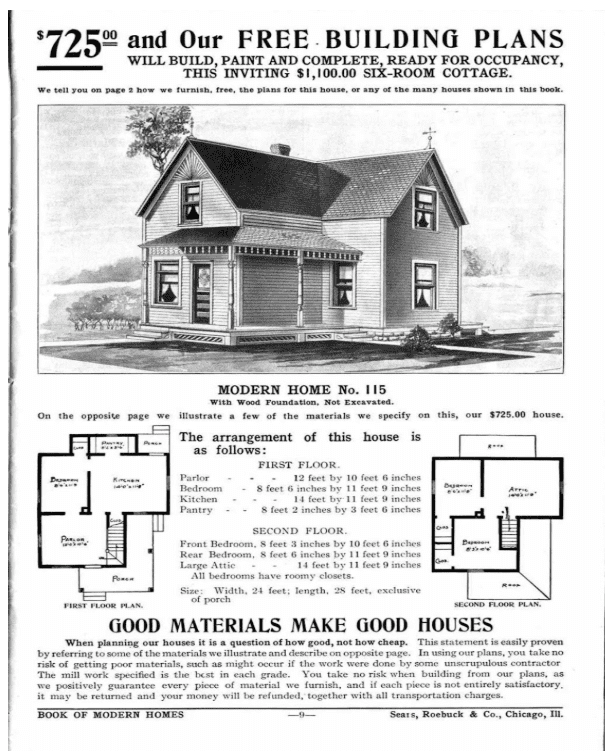
Some shipments contained 10,000 to 30,000 pieces and could weigh up to 25 tons. Each kit included a thick instruction manual guiding homeowners step-by-step through the construction process. Advertisements even claimed many homes could be built in about 90 days.
In many communities, putting up one of these homes looked a lot like the old barn raisings of rural life. Friends, relatives, and neighbors pitched in to help assemble the structure piece by piece, just as they would for a community barn.
That same spirit filled the air in Rankin County.
In 1917, Mack David Whitley married Ora Bethune and began planning a home for his new bride. Mack studied the thick Sears catalog—reportedly weighing nearly four pounds—before choosing a design he liked.
Around 1918, following their marriage, the home arrived by rail in Brandon and was transported to the couple’s 100-acre farm near the Langford community.
Piece by piece, the house was assembled. Before long, it became the center of a large and lively family life.
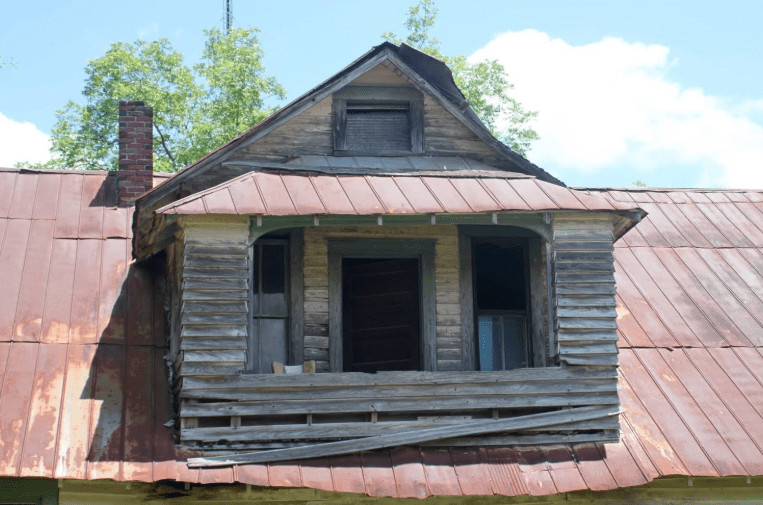
Inside those walls, the Whitleys raised twelve children. The farm buzzed with activity—Sunday lunches, cousins playing in the yard, children exploring the barn, and long afternoons spent swimming or fishing in the nearby pond.
One granddaughter later recalled that, when Mack passed away at 84, the family had grown to include 48 grandchildren and 7 great-grandchildren.
For the younger generations, the farm was full of adventures. Kids balanced along the porch railing, held corn cob fights near the barn, and gathered pecans beneath the trees surrounding the property.
Yet, like most homes that stand for generations, the house also witnessed its share of heartbreak, woven into the tapestry of family memories.
One of the Whitleys’ sons died at age 21 while serving in the U.S. Army during the Korean War. Ora herself passed away in the pasture surrounding the home. Mack followed her only months later, in December of 1955.
Eventually, after the family moved on, the old farmhouse gradually slipped into quiet.
Over time, as the 20th century progressed, the empty house began to gather stories of its own. Local legends circulated about ghosts in the nearby pecan orchard, and the property became a destination for curious teenagers. In fact, a group of local teens was reportedly arrested there in 1980 while ghost hunting.
For years, people claimed the home still held antique furniture and family heirlooms. Vandals eventually stripped away many of its contents. Today, the structure sometimes serves a much simpler purpose—storing hay for livestock.
Despite offers from interested buyers over the years, the owner has never sold the property.
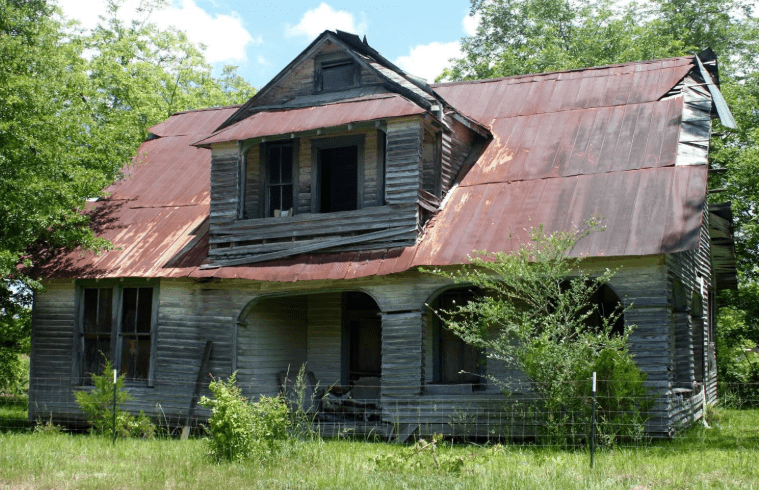
So, the old house remains where it has always stood, becoming a familiar landmark along the road for every passing generation.
Across America, more than 70,000 Sears kit homes were sold between 1908 and 1939. When World War II began, the demand for lumber and building materials quickly halted most residential construction, and Sears eventually closed its Modern Homes program.
Today, some of those remarkable homes still remain, standing as testaments to a unique era of American architecture and ingenuity.
And one of them, quietly enduring the years, still stands in Rankin County—reminding us that sometimes the most fascinating Mississippi stories begin in the most unexpected place.
Sometimes, even in a catalog.