

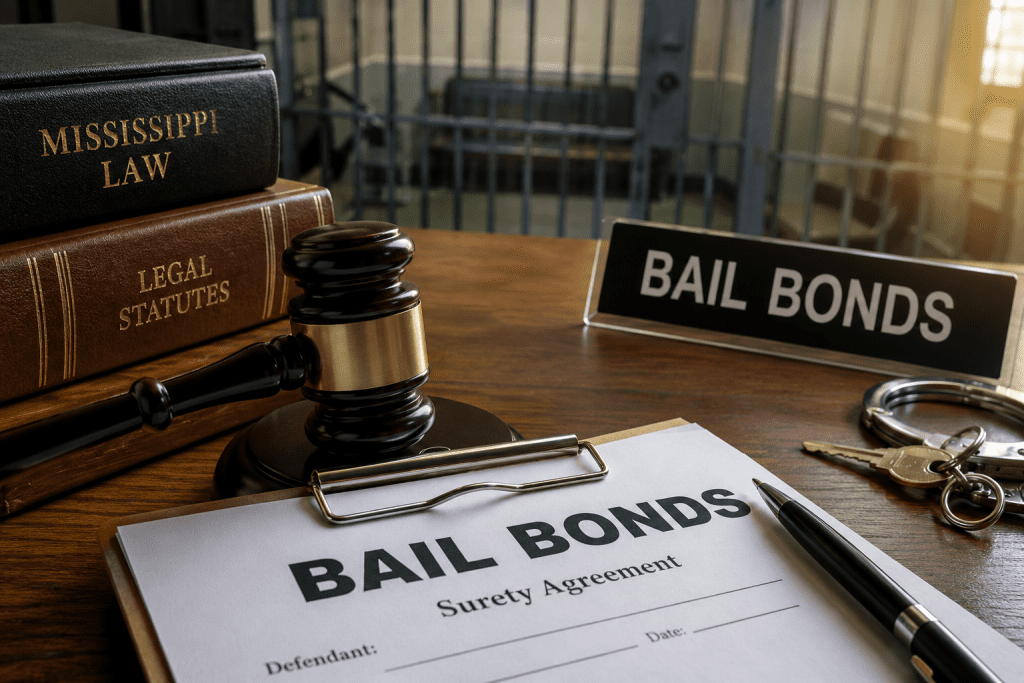
When most people hear the phrase “bail bonds,” they immediately think of crime dramas, flashing police lights, or reality television. In reality, the bail bond system plays a much more practical role in the justice process, especially in states like Mississippi where many defendants simply cannot afford to pay large cash bonds out of pocket.
Bail exists for one primary reason: to allow a person accused of a crime to remain out of jail while waiting for court proceedings. In the United States legal system, individuals are presumed innocent until proven guilty. However, courts also need assurance that defendants will return for future hearings. That is where bail comes in.
In many situations, the amount set by the court may be thousands of dollars. For working families, paying that amount in full is often impossible. Bail bonds help bridge that gap. A licensed bail bond agent posts the bond on behalf of the defendant in exchange for a fee, usually a percentage of the total bond amount.
In Mississippi, the bail bond industry is regulated through the Mississippi Insurance Department, which oversees licensing requirements, renewals, continuing education, and enforcement standards for bail agents throughout the state.
One reason bail bonds remain important is that local jails can become overcrowded when low-level offenders remain incarcerated solely because they cannot afford bond. Critics of the system argue that wealthier defendants can more easily secure release while poorer individuals may remain jailed for minor offenses. Supporters counter that bail bonds provide a practical alternative for families who would otherwise have no option at all.
This debate has become increasingly common across the country, including in Mississippi. In recent years, lawmakers and legal professionals have discussed changes to bond procedures and pretrial release standards. Several proposed legislative measures in Mississippi have focused on how defendants are returned to custody when bond conditions are violated or when court appearances are missed.
At the same time, many bail bond professionals argue that their role extends beyond simply posting bond paperwork. Agents often coordinate with families, remind defendants about court appearances, and help navigate confusing legal procedures during stressful situations.
The industry itself is larger than many people realize. Organizations within Mississippi regularly provide education, procedural guidance, and updates on changes in state law for licensed bail agents.
Mississippi has also seen several high-profile news stories involving bonds and pretrial release. One of the most widely discussed legal scandals in the state involved the Mississippi welfare fraud investigation, which became national news after allegations surfaced involving misuse of federal welfare funds. The case drew attention not only because of the money involved, but because it highlighted how complex financial crimes move through the court system, including issues involving bond amounts, legal proceedings, and pretrial conditions.
Cases involving violent crime have also intensified public discussion about bond reform. Across the South, including neighboring states, communities have debated whether certain defendants accused of violent crimes should be eligible for bond at all. These conversations often intensify after tragic incidents involving repeat offenders who were released pending trial. While opinions vary, the debate has pushed bail reform into mainstream public discussion.
Still, the majority of bail bond cases are not high-profile scandals or headline-making criminal cases. Most involve ordinary people facing difficult situations such as DUI charges, probation violations, misdemeanor arrests, or nonviolent offenses. For families, the process can be emotionally and financially overwhelming.
This is one reason why many people search online for terms like “bail bonds near me” or “24-hour bail bonds.” Arrests do not happen on a schedule, and many bond agencies operate around the clock because jail bookings can occur at any hour. In smaller Mississippi communities especially, local familiarity with county courts and detention centers can significantly speed up the release process.
Technology is also changing the industry. Many bail bond agencies now offer digital paperwork, electronic signatures, payment portals, and faster communication systems than were common even a decade ago. Some agencies use automated reminders to help reduce missed court appearances.
Despite modernization, the future of bail bonds remains uncertain in some parts of the country. Several states have experimented with reducing or eliminating cash bail for certain offenses. Advocates say this creates a fairer system, while opponents argue it can increase failure-to-appear rates and create public safety concerns.
However, in Mississippi, bail bonds remain deeply tied to the functioning of the criminal justice process. Whether viewed as a necessary service, a controversial industry, or something in between, bail bonds continue to affect thousands of families, defendants, attorneys, and courts every year.
For most people, it is an industry they never think about until a crisis suddenly makes it personal.