
By Richelle Putnam, Magnolia Tribune
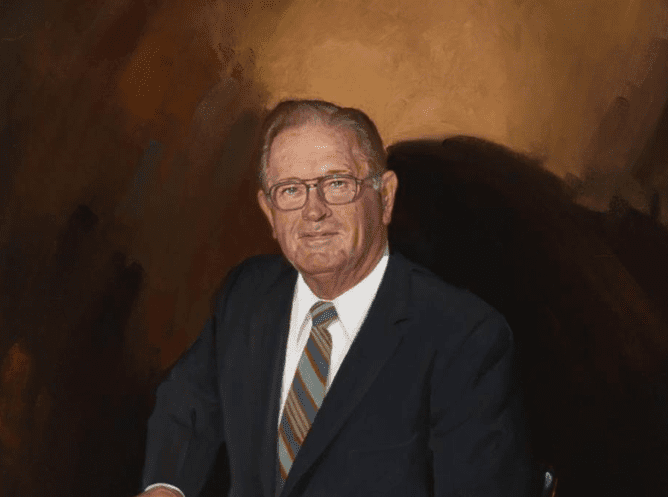
Portrait of Mississippi Congressman Jamie L. Whitten by Marshall Boudin
In the Mississippi Delta, a particular kind of light settles onto the fields and lingers among the people who have grown accustomed to it. But as light fell on Marshall Bouldin III as a child, it became something more than atmosphere, more than day and night. It became a language filled with form, dimension, depth, mood, emotion, and texture. And that Delta child would learn to speak the language of light fluently.
Born in 1923 in Dundee, Bouldin graduated from Clarksdale High School and briefly attended the School of the Art Institute of Chicago on scholarship. But he left before graduating.
A congenital physical impairment kept Bouldin from serving in World War II, so he worked as a draftsman at Vultee Aircraft Company in Nashville. That disciplined environment of measurement and structure would later impact his expressive work.
After the war, Bouldin apprenticed as a commercial illustrator, producing work for national magazines such as Outdoor Life and Collier’s. This line of work was practical for artists like him, but illustration demanded clarity, immediacy, and adherence to strict editorial requirements.
The artistic turning point came when Bouldin visited the Metropolitan Museum of Art and saw Van Gogh’s work. There, he realized that art could actually be a “freedom of expression.” With this inspiration, he returned to Mississippi in 1950 to pursue his sense of artistic freedom.
Home Again, Re-visioning
Back home in the Delta, light gathered again and Bouldin painted relentlessly. To understand physical structure, he studied human bones as if in medical training. He approached color the same way. He developed mixing systems to serve both aesthetic and psychological goals. He believed “hard work” was inseparable from artistic truth. He also painted farmworkers, neighbors, and ordinary people.
The Delta was more than a backdrop in his work. In 1954, he married Mary Ellen “Mel” Stribling, a physician committed to public health, and they became partners who defied Delta life stereotypes. By 1956, Bouldin was fully committed to portraiture.
The Art of Looking
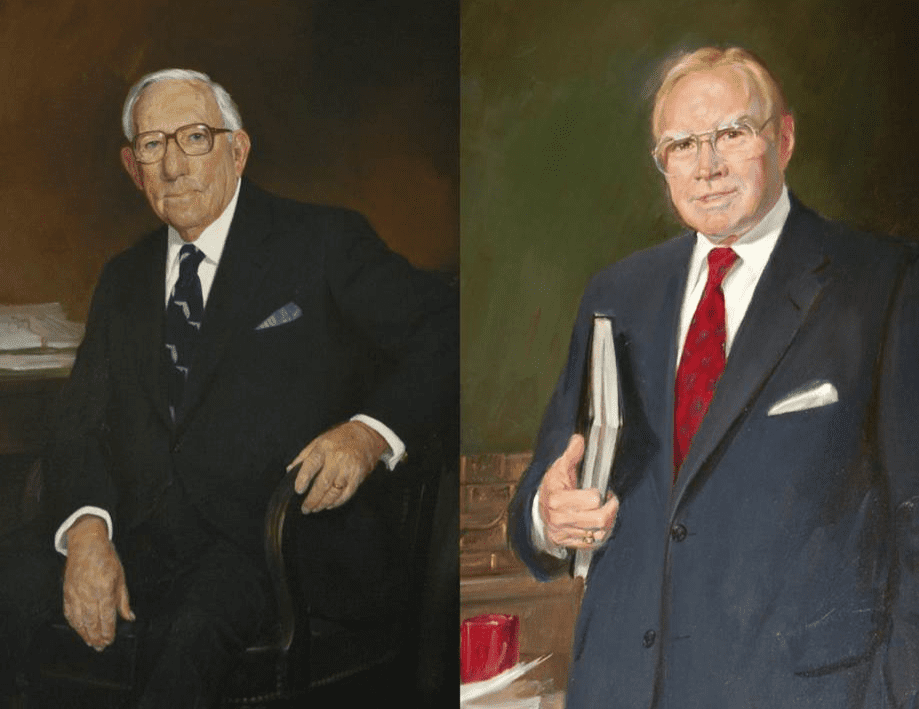
Portrait painting is about attention, and Bouldin knew this. But place was just as important to him in all this work, even when he painted national figures. He might note a desk, a gesture, or a field of color before choosing the sitter’s posing position. He interviewed, sketched, photographed, and sometimes filmed his subjects. For Bouldin, it wasn’t enough to just “see” them. He had to “know” them.
Bouldin’s reputation grew, and soon he received national commissions. His portraits hung in Congress, including those of Congressman Jamie Whitten, Senator Claude Pepper, and Speaker Jim Wright. He became known as “the South’s foremost portrait painter,” a phrase by The New York Times. The title conveyed both his regional identity and significance. Even as recognition grew, Bouldin remained in the South, reshaping how others viewed the Delta region and Mississippi.
Rediscovery
Discovering Marshall Bouldin III and his work, we learn that on his canvases, people are not mannequins. They breathe, work, play, and live. Late in Bouldin’s life and after his 2012 death, his work reemerged in exhibitions and retrospectives, including a major show at the Mississippi Museum of Art and 2024 centennial programming at the Walter Anderson Museum. This renewed attention to previously unseen pieces, such as his early Delta watercolors and scenes of everyday people.
So, even today, light falls on the Delta in Bouldin’s work—across the landscapes he walked and the people he knew.