

By Russ Latino, Magnolia Tribune
(Photo from Shutterstock)
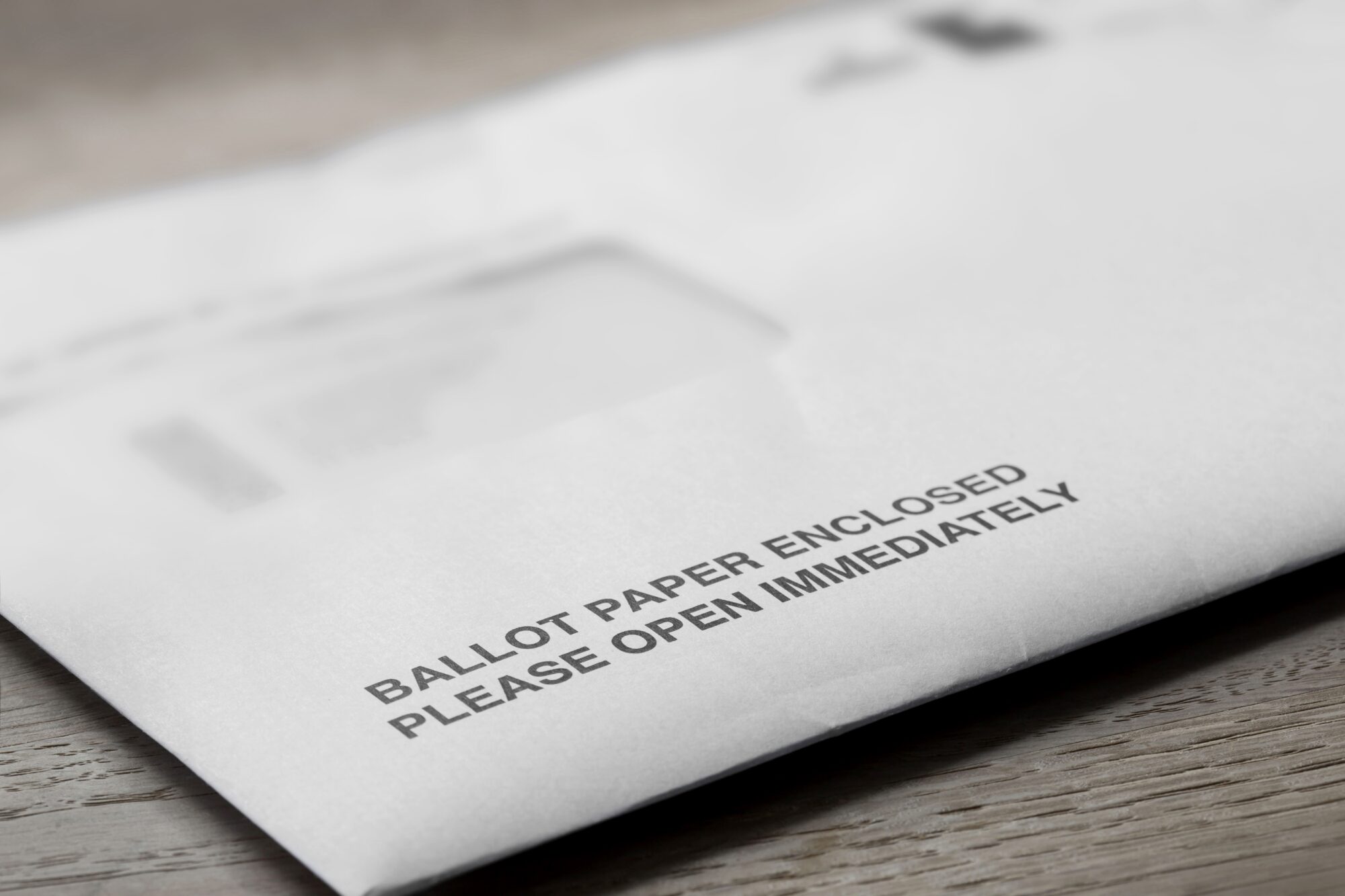
In a 5-4 decision, the U.S. Supreme Court ruled Monday that federal law does not prohibit Mississippi from counting absentee ballots that are postmarked by Election Day, but arrive up to five business days afterward.
In an opinion written by Justice Amy Coney Barrett, the Court held that Congress requires voters to cast their ballots by Election Day, but does not require election officials to receive every ballot by that date.
“The federal election-day statutes do not prevent Mississippi from counting absentee ballots postmarked by election day but received up to five days thereafter,” Barrett wrote. “Nothing in the federal election-day statutes requires ballots to be received by election day.”
Mississippi Governor Tate Reeves responded to the ruling by calling on state lawmakers to repeal the COVID-era law during the 2027 session.
“While I disagree with Justice Roberts and Justice Barrett joining the three liberal justices to form the 5-4 majority in today’s SCOTUS ruling, we’re not going to try to delegitimize the Court, dox the justices or show up at their homes, picket in the streets, or make ridiculous calls to pack the Court in the future,” Governor Reeves shared on social media. “But just because the Court ruled the practice constitutional doesn’t mean we should allow it in our state. Next session, I call on the Mississippi Legislature to repeal the COVID-era law and require mail-in ballots to be received by the clerk by 5:00pm on Election Day in order to be counted.”
Both Lt. Governor Delbert Hosemann and Speaker Jason White said they would be looking to address the law following the ruling.
Hosemann told Magnolia Tribune, “I was in favor of limiting the mail in ballots to those received Election Day or prior, to prevent ballots being counted after Election Day, two years ago. I will work with my Chairman to bring it up again next session.”
White said he was “sure there will be multiple bills to change this law now that the Court has ruled,” and added “I do anticipate we will look specifically at trying to make sure all ballots are cast and in hand no later than Election Day. It just seems like common sense to my folks.”
The Court reversed a decision by the U.S. Court of Appeals for the Fifth Circuit and remanded the case for further proceedings.
The case, Watson v. RNC, centered on a Mississippi law requiring absentee ballots returned by mail to be postmarked on or before Election Day and received by county election officials within five business days after the election. That provision was enacted in 2020 as part of House Bill 1521, legislation approved during the COVID-19 pandemic that revised several aspects of Mississippi’s absentee voting laws.
The Republican National Committee, Mississippi Republican Party, Libertarian Party of Mississippi and individual voters challenged the law in 2024, arguing that it violated federal statutes establishing a uniform Election Day for congressional and presidential elections.
The plaintiffs argued that because Congress established a single Election Day nationwide, ballots must not only be cast by Election Day but also received by election officials before polls close. In their view, Mississippi’s five-day receipt period unlawfully extended the federal election.
Parties opposing the challenge countered that federal law establishes the deadline for voting, not the deadline for receiving ballots. They argued that a voter makes his or her electoral choice when casting a ballot by Election Day, while states retain authority to establish reasonable procedures for receiving, canvassing and counting those ballots afterward.
The Supreme Court agreed.
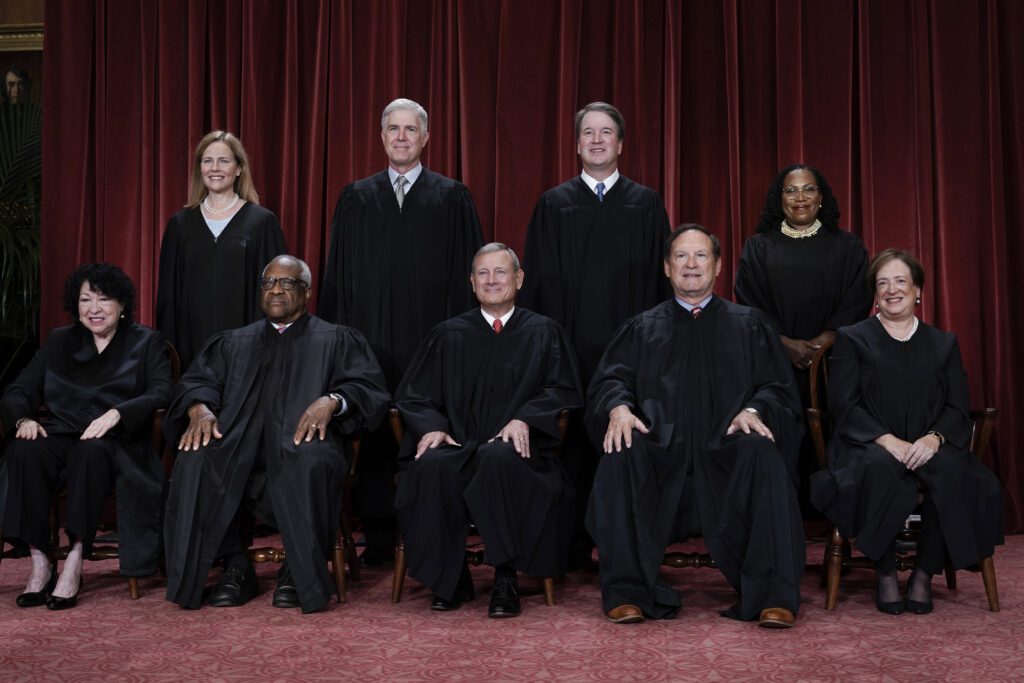
Barrett wrote that the ordinary meaning of “election” when Congress enacted the relevant statutes referred to the act of choosing candidates—not the later administrative process of receiving and tabulating ballots.
The opinion also relied heavily on the Uniformed and Overseas Citizens Absentee Voting Act, commonly known as UOCAVA. That federal law requires states to provide absentee voting opportunities for military members and citizens living overseas and repeatedly references ballot receipt deadlines established under state law.
According to the Court, those references would make little sense if Congress had already imposed a nationwide requirement that every ballot be received by Election Day.
The Court also rejected the plaintiffs’ reliance on historical voting practices and earlier Supreme Court precedent.
Although many states historically required absentee ballots to be received on Election Day, Barrett wrote that historical practice does not override statutory text. Likewise, the Court concluded its 1997 decision in Foster v. Love addressed when an election may be completed, not whether mailed ballots must physically arrive by Election Day.
The Court emphasized that its decision addressed only one narrow question: whether federal election statutes prohibit states from counting ballots received after Election Day if they were timely mailed.
The justices expressly declined to consider broader questions about absentee voting, early voting, Congress’s constitutional authority over elections, or whether other aspects of Mississippi’s election system might conflict with federal law.
One issue left unresolved involves whether voters retain the ability under postal regulations to intercept or recall a mailed ballot before it reaches election officials. The plaintiffs argued that possibility means voting is not truly complete on Election Day. The Court concluded that even if the plaintiffs were correct, that argument presented a different legal question than the one before it. Monday’s decision held only that post-Election Day receipt, standing alone, does not violate federal law.
U.S. District Judge Louis Guirola Jr. initially upheld the challenged law, concluding that federal election statutes did not establish a ballot-receipt deadline.
The Fifth Circuit reversed in October 2024, holding that federal law required ballots in federal elections to be received by Election Day. After the full Fifth Circuit declined to rehear the case, Mississippi petitioned the U.S. Supreme Court, which agreed to hear the appeal during its current term.
Monday’s ruling restores Mississippi’s absentee ballot receipt law and resolves a question with implications beyond Mississippi. Thirty other states permit at least some mailed ballots that are postmarked by Election Day to be counted after Election Day if they arrive within deadlines established by state law.
Reaction from Mississippi
Mike Hurst, Chairman of the Mississippi Republican Party
“While I respect the Supreme Court’s decision today in Watson, I firmly believe the ruling is not grounded in the Constitution, the text of the law, or the original meaning and historical practices relating to elections. The Constitution empowered Congress with ultimately deciding these matters, Congress established an Election Day for federal elections, and state laws allowing the receipt of votes after that date should have been preempted. Election Day means Election Day, not election week, election month or election year.
“Ultimately the Court’s view that elections are completed when a voter makes a choice is not supported by practicality or common sense, as elections cannot occur without a state actually receiving the ballots. I believe Mississippi will fix its statute to reflect this, but I am gravely concerned about Democratic-led states that will use today’s ruling to further manipulate elections and continue to dilute trust and confidence in our electoral system.”
Attorney General Lynn Fitch
“With the bedrock constitutional principle of federalism now affirmed, I am hopeful that the Mississippi Legislature will take this opportunity to amend the amend the law and require absentee ballots be received on the same day ballots are cast at the polling place.
“President Trump is right to prioritize improving public trust in our elections.”
Secretary of State Michael Watson
“While I oppose the practice of counting ballots received after Election Day, the principle of federalism is a core tenet of my conservatism. I deeply value the rights of states to govern themselves, including the administration of elections, so long as they do not conflict with federal law.
“Although policies in states like California often undermine confidence in election integrity, the Supreme Court’s ruling confirms that is a decision to be made by Congress or, in its absence, state legislatures.
“Elected officials and voters alike should continue demanding stronger election integrity laws across the country.”
Ken Martin, Democratic National Committee Chairman
“Today, democracy prevailed. The DNC is proud to have stood with the State of Mississippi to defeat the RNC’s latest attack on Americans’ voting rights. The RNC’s lawsuit attempted to rip away democratically enacted safeguards for millions, including U.S. service members.
“Trump and Republicans are attacking our elections and trying to rig the system in their favor because they know the American people are ready to reject their chaos and corruption this November. The DNC will remain vigilant and use every tool at our disposal to protect every eligible voter’s access to the ballot box.”