
By Marilyn Tinnin, Magnolia Tribune
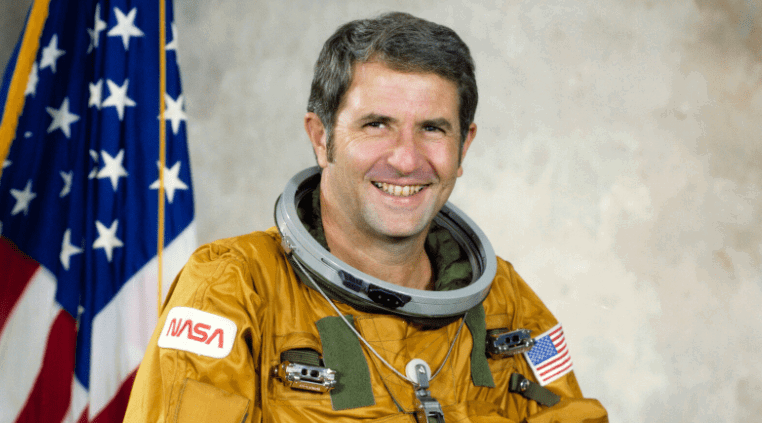
Richard Truly (Photo from nasa.gov)
When the ill-fated Space Shuttle Challenger exploded 73 seconds into liftoff on January 28, 1986, the confidence of the entire nation was shattered. Every American, from the school child to the elderly and those who had never had an interest in space exploration, was devastated by the loss of the seven crew members whose lives were lost that chilly morning.
Three weeks later, as public opinion and pounding media coverage continued to demand answers, President Ronald Reagan appointed retired astronaut, veteran space instructor, and engineer Richard Truly to oversee the inquiry into the accident and the rebuilding of the Space Shuttle program. He quickly proved to be a wise, level-headed, and respected voice who knew his stuff. He also possessed strong interpersonal skills as he worked with the Rogers Commission, the special investigative panel created by Congress to determine the cause of the disaster.
In an interview at the Colorado School of Mines in 2012, Truly called that assignment the most difficult he had ever faced. He described walking into NASA offices on his first day of work and seeing personnel weeping in the hallways, a place so broken that he wanted to flee. However, with quiet determination, his military discipline, and old-fashioned integrity, Truly rolled up his sleeves and went to work accomplishing his mission.
It took 32 months for the necessary redesigns and an overhaul of management and safety procedures, but Americans cheered when the new Discovery Shuttle took flight on September 29, 1988. Richard Truly never bowed to pressure to rush the task.
Truly, U.S. Navy pilot, Vice Admiral, shuttle astronaut, NASA administrator, and leader of the Georgia Tech Research Institute, and the National Renewable Energy Laboratory was born in Fayette, Mississippi, on November 12, 1937. He spent most of his growing-up years in Meridian before heading off to Georgia Tech, where he received a Bachelor of Science degree in aeronautical engineering in 1959.
As a member of the Navy ROTC program during his college years, Truly was ordered to flight school upon graduation. He was an exceptional fighter pilot who flew F-8 Crusaders aboard the USS Intrepid and the USS Enterprise during the 1960’s. His 2024 obituary says he was quite proud to be a member of the elite Golden Eagles, a select designation for those who have completed at least 1,000 specific carrier landings, a feat that few ever master.
Although aviation fascinated him, Truly did not plan to become an astronaut. Instead, that career came his way almost by accident. He was chosen for a short-lived U.S. Air Force Manned Orbiting Laboratory (MOL). When that project was canceled in 1969, NASA assigned him to its seventh group of Apollo astronauts.
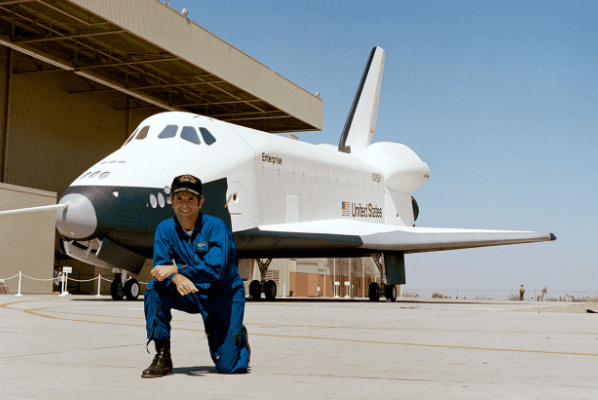
By then, the Apollo missions were almost done, and NASA had begun serious work on the space shuttle, a reusable space transportation system. The Enterprise, the first shuttle, was finished in 1976. It was never meant for space launch, but served as a test model and experiment—a bridge to America’s next space innovation. Launched piggyback on a modified Boeing 747, Truly helped prove it could land like an airplane through glide tests in 1977.
He was also the pilot of the Columbia shuttle that launched into space on his 44th birthday, November 12, 1981. This was Columbia’s second flight, a milestone in the space program that proved it was possible to reuse the shuttle.
The press gave great attention to that mission. A conversation between President Reagan and Truly was broadcast on live television during the flight, and a most humorous light moment each day was the wake-up call the astronauts received. The popular television Muppet Show frequently featured sketches called “Pigs in Space.” Jim Henson, Muppet creator, was hired by NASA to create a few audio wake-up calls featuring “Miss Piggy,” and her friends, “Captain Hogthrob” and “Dr. Strangepork.” A touch of comedy did unite everyone as the nation cheered together the achievements of NASA!
In 1983, Truly was again a principal in a milestone flight, serving as Commander of the famous Challenger shuttle on its third trip into space. It would be Richard Truly’s final journey. With a crew of six, including Guy Bluford, the first African-American astronaut, theirs was the first time a shuttle launched and landed at night.
When the crew landed on September 5 at Edwards Air Force Base, Richard Truly marked the end of his astronaut experience. He had circled the earth 135 times and spent eight days, seven hours, and 21 minutes away from the planet!
Truly served as the eighth Administrator of the National Aeronautics and Space Administration, from July 1989 through March 1992, under President George H.W. Bush.
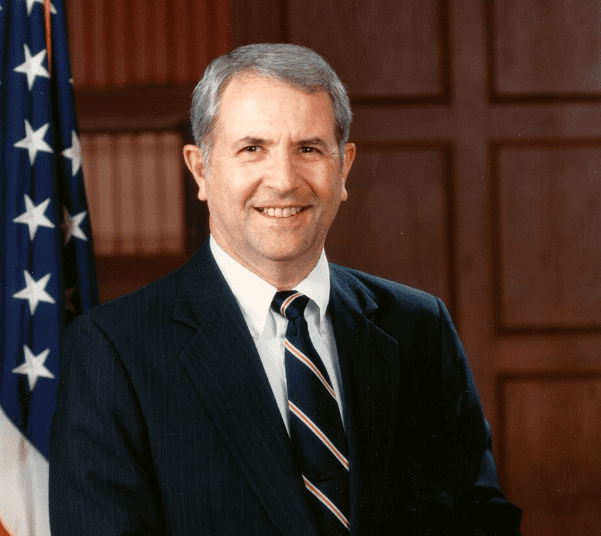
His groundbreaking accomplishments as a leader in America’s space program easily place him among the legends. But it was the final paragraph in his obituary that impressed me most. Throughout his decades of service to the country, he remained a committed husband and father. Richard Truly took that commitment seriously.
He was the father of two sons and one daughter who wrote of their beloved father, “Richard was a husband, dad, grandpa, and great-grandpa. He taught us to whistle, fold paper airplanes, drive, and mow the lawn. He helped us understand inflation when our allowance increased. He showed us the importance of repaying loans and the value of procrastination—never peak too early. He shared his love for stargazing, satellite spotting, genealogy, and books. He would go to great lengths to avoid camping. He was our biggest champion and always there for us all.”
Truly left this planet’s orbit in 2024. The final line of his obituary rings true: Richard Truly had one hell of a life and will be missed to the ends of the earth. RIP, Mississippi Legend. Well done.