By Susan Marquez, Magnolia Tribune
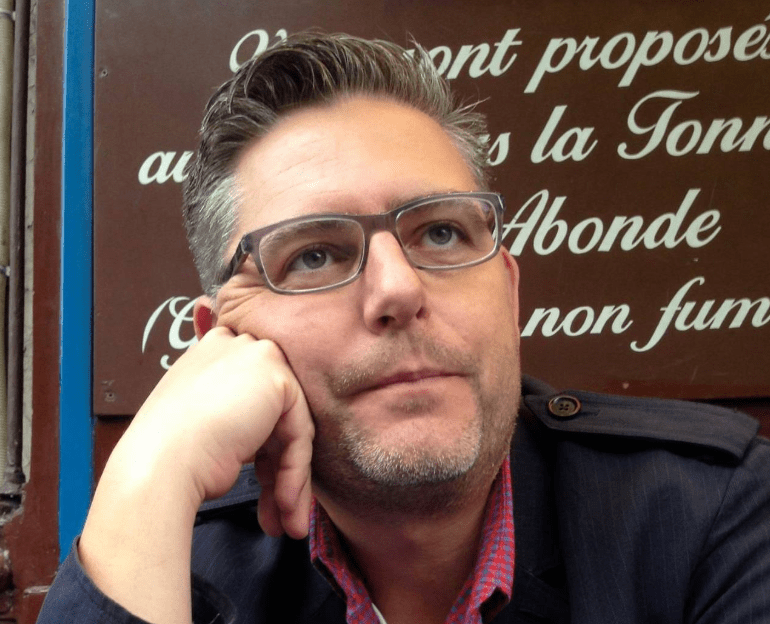
Calvin Phelps is an arts leader and community advocate working to advance cultural development and creative placemaking in Southwest Mississippi. As the founder and executive director of Pike School of Art – Mississippi (PSA-MS), he is leading the transformation of a former Pike County juvenile detention center into a community arts facility to serve residents across Pike County and the surrounding region.
“PSA-MS is a space for creative experimentation,” explains Phelps. “The mission of Pike School of Art – Mississippi is to inspire community conversations through art that critically examine and evolve our local narratives. We focus on sustainability, justice, restoration, equity, community dialogue, and education.”
Phelps was born in McComb, where he lived for the first decade of his life. “My dad worked in McComb for the Illinois Central Railroad until the mid-70s when the railroad began closing down shops in McComb. My mother was always a musician, a pianist and singer. My family moved to Maracaibo, Venezuela, when I was ten years old. We spent four years there before moving back to the United States. My dad was in engineering, and when we moved back, we moved to where his company was based, Houston, Texas. When I was younger, my parents encouraged me to become a singer. They wanted me to be the next Elvis, but I discovered visual art in high school.”
Phelps developed a love for art, and while attending Stephen F. Austin State University, he took several art courses before transferring to the University of Southwest Mississippi. “I was disillusioned by my time at USM and decided to move back to Houston, where I took a few odd jobs. I ended up in a relationship, moved to Chicago, and eight years later, decided to go back to school. I applied and was accepted into the Art Institute of Chicago, one of the top art schools in the nation.”
His prior professional experience prepared him well for his role at PSA-MS. He worked for
over a decade as director for three Los Angeles contemporary art galleries: Christopher Grimes Gallery, Anna Helwing Gallery, and Steve Turner Contemporary. “In 2010, I transitioned into the nonprofit sector, working in development with Los Angeles Nomadic Division (LAND) and Armory Center for the Arts, Pasadena, CA, where I served as Communications Manager and Development Assistant. There, I curated and helped organize several exhibitions.”
In 2013, Phelps opened 2A Gallery, a small alternative space in downtown Los Angeles that presented ambitious site-specific exhibitions and projects. 2A Gallery, designed to utilize a unique space as a venue for creative production and exhibition, occupied a small office in a renovated downtown apartment building and was written about in Huffington Post, New York Post, Los Angeles Times, LA Weekly, art ltd. magazine, and other media outlets. “I have also written art criticism for Artillery Magazine, art ltd. magazine, ArtSlant, and The New Gay and contributed essays to various exhibition catalogs.”
Beyond his role with Pike School of Art, Phelps has been involved in local civic and cultural initiatives focused on strengthening McComb’s creative economy and supporting downtown revitalization. “I regularly collaborate with artists, educators, nonprofit leaders, and community stakeholders to position the arts as a catalyst for community development and public engagement in Southwest Mississippi.”
As an adult who once lived in McComb as a child, Phelps says that what matters most to him is helping build a community where creativity, opportunity, and collaboration can thrive. “I care deeply about strengthening our city through the arts, education, and community partnerships that bring people together and create new possibilities for the future.”
Investing in McComb’s people and places is critical to that mission. “I believe we need to support local artists, expand access to arts and cultural programming, and preserve and reimagining historic spaces so they can serve the community in new ways. I am especially interested in initiatives that encourage civic engagement, support young people, and foster a sense of pride and belonging in our city.”
He also cares deeply about the role that arts and culture can play in economic development and downtown revitalization. “By cultivating a vibrant creative community, I believe McComb can attract new ideas, support local businesses, and create meaningful opportunities for residents while honoring the city’s rich cultural history.”
To see change, it’s imperative to be part of the change. “The change I would like to see in McComb is a community that fully recognizes and invests in its creative potential. I want to see the arts, culture, and local history embraced as essential parts of our city’s identity and future—not just as entertainment, but as tools for education, economic opportunity, and civic connection. More broadly, I want McComb to be a place where collaboration across neighborhoods, organizations, and generations is the norm. By working together and supporting creative initiatives, we can build a city that is more vibrant, inclusive, and hopeful—one where people feel connected to each other and excited about what McComb can become.”
In a perfect world, Phelps says McComb would be a vibrant, connected community where creativity, opportunity, and pride in place are visible in everyday life. “It would be a city where historic buildings are restored and filled with activity—galleries, studios, small businesses, classrooms, and gathering spaces that welcome people from all walks of life. McComb would have strong support for the arts, education, and local entrepreneurship, with pathways that allow young people to imagine a future for themselves right here at home. Artists, teachers, business owners, and community leaders would work together to build a creative economy that celebrates the city’s rich cultural history while creating new opportunities for residents.”
In Phelps’ ideal future, McComb would also have more public spaces and community-centered institutions where people can meet, learn, and collaborate. “The arts would be integrated into civic life, helping foster a sense of belonging and shared purpose. Ultimately, McComb would be known not just for its past, but for its forward-looking spirit—a small city that values creativity, invests in its people, and believes in its ability to shape its own future.”
Phelps says his favorite thing about living in McComb is the sense of possibility that exists in a small community. “It’s a place where relationships matter, where people know one another, and where an idea can turn into something real because neighbors, organizations, and local leaders are willing to come together to make it happen. I also appreciate McComb’s rich cultural history and creative spirit. For a small city, it has produced and inspired remarkable artists, musicians, and storytellers. Being part of a place with that legacy makes it exciting to imagine how the arts can continue to shape the community’s future.”
Most of all, what Phelps values about McComb is the opportunity to contribute—to help build spaces, programs, and partnerships that bring people together and create new energy in the city. “Living here means being able to see the direct impact of that work in the lives of neighbors, students, and artists in the community.”
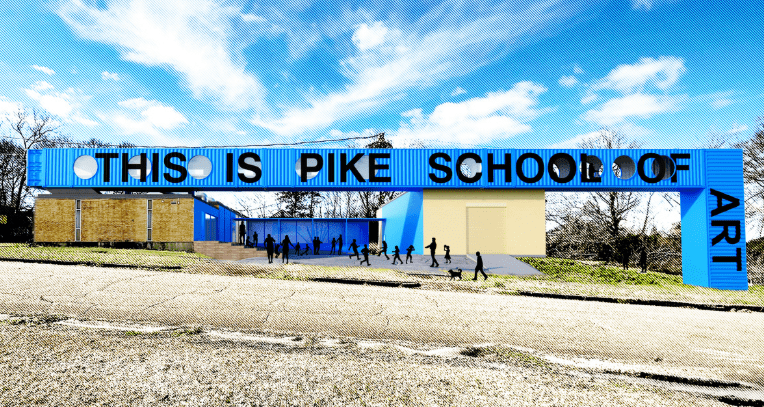
If a visitor to McComb could only visit one place, Phelps would like them to visit the Pike School of Art — Mississippi. “It represents both the history and the future of the city. The building itself—once a juvenile detention center—is being reimagined as a place for creativity, learning, and community connection. More than anything, the space tells a story about transformation—how a place once associated with confinement can become a center for imagination, expression, and opportunity. For me, that transformation captures the kind of future I hope McComb continues to build.”
Fun Fact about Calvin Phelps
“I recently discovered that my brother and I are Third Culture Kids. Being a Third Culture Kid (TCK) means growing up influenced by more than one culture, often because your family lived, worked, or moved between different countries or cultural environments during your formative years. Instead of identifying completely with just one culture, a TCK develops a sense of identity that blends elements from several places. For me, being a Third Culture Kid means having a worldview shaped by multiple cultural perspectives.”
It often comes with an ability to adapt quickly to new environments, connect with people from different backgrounds, and see common ground across cultures. At the same time, it can mean feeling a little out of place anywhere—never entirely belonging to just one cultural home.
The “third culture” isn’t a specific location; it’s the shared experience created by people who grow up between cultures. It’s an identity formed through movement, cross-cultural relationships, and exposure to different ways of living and thinking. Many Third Culture Kids carry with them a strong sense of curiosity about the world, an appreciation for diversity, and a comfort navigating spaces where different cultures meet.
As TCKs grow up, they tend to be more nomadic. “My brother took a job with Shell that had him travel the world and live for a while in Nigeria; Russia; and Canada, among other places. For pleasure, I have traveled to Sydney, Australia; Tokyo, Japan; Zurich, Switzerland; Munich and Berlin, Germany; Barcelona, Spain; Mexico City; Mexico; and all over France, among other places. This year and next, I’ll be traveling to Sweden; and Morocco, my first trip to Africa.”