
By L.A. Warren/ UMMC Communications
Photos By: Jay Ferchaud/ UMMC Communications
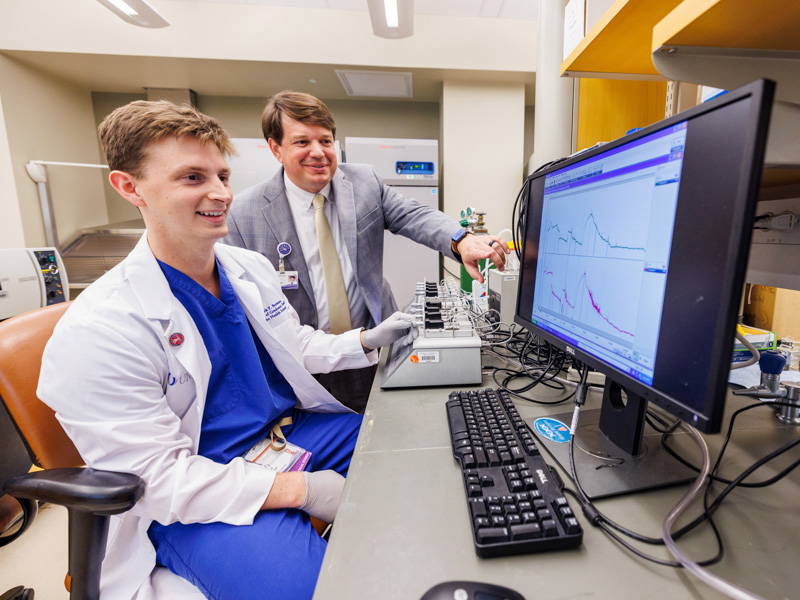
MD-PhD student Jack Berman, left, reviews research data with Dr. Lee Bidwell, associate vice chancellor for research, whose mentorship allows Berman to explore pharmacology and new therapeutics alongside his cardiovascular research.
University of Mississippi Medical Center students training to become physician-scientists are entering an elite tier of medical and research education after the National Institutes of General Medical Sciences awarded UMMC the prestigious Medical Scientist Training Program, or MSTP, designation.
The national MSTP award by NIGMS, part of the National Institutes of Health, strengthens UMMC’s longstanding investment in its MD-PhD students. Currently, the Medical Center provides stipend support and tuition scholarships covering four years of medical school and up to three years of graduate research.
Beyond the financial investment, the designation recognizes the strength of UMMC’s research, educational and clinical environments and its ability to prepare students for careers that combine medicine with scientific discovery.
For Dr. Joshua Speed, an associate professor and director of UMMC’s MSTP, the award represents a milestone and an affirmation.
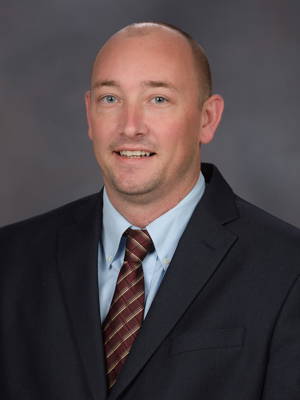
Dr. Joshua Speed
“MSTP designation is the most prestigious recognition for an MD-PhD program by the National Institutes of Health,” Speed said. “It provides critical funding to support student stipends and other needs of our physician-scientists in training. Attaining this award signifies a healthy MD-PhD program and strengthens our ability to recruit and train the brightest students from Mississippi and beyond.”
The distinction also places UMMC among a relatively small group of institutions recognized by NIGMS for excellence in physician-scientist training.
“Earning an MSTP affirms the strength of our research enterprise and the quality of our educational and clinical environments,” Speed said.
He added, “An MD prepares graduates primarily to diagnose, treat and care for patients, whereas an MD-PhD is trained both to apply that knowledge and to generate the discoveries that may shape future care.”
That combined preparation, he said, equips physician-scientists to connect problems they encounter in patients with laboratory, translational or population-based research.
“This prestigious designation reflects the strength of the partnership between the School of Graduate Studies in the Health Sciences and the School of Medicine, as well as UMMC’s mission of excellence in health care, education, and research,” said Dr. Sydney Murphy, dean of the SGSHS.
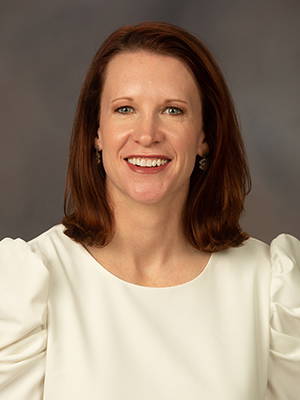
Dr. Sydney Murphy
“By integrating rigorous doctoral research with exceptional clinical training, we are preparing physician-scientists who can translate the challenges they encounter in patient care into meaningful scientific questions and discoveries,” Murphy said. “Their work has the potential to improve health outcomes in Mississippi and advance medicine far beyond our state.”
For fifth-year MD-PhD student Madison Hansen, UMMC’s new MSTP designation provides a nationally recognized “marker of distinction” that she believes will lure future physician-scientists.
“I’m happy that we got that marker now, and hopefully we’ll attract more students,” she said.
Hansen’s research focuses on lupus, particularly whether estrogen metabolism and the gut microbiome may help explain why the autoimmune disease disproportionately affects women.
Meanwhile, fourth-year MD-PhD student Jack Berman is investigating a novel therapy designed to prevent blood vessel constriction, with potential applications in conditions such as kidney disease and obesity.
Berman said the opportunity to complement “exceptional clinical training” with a rigorous study in pharmacology at UMMC is preparing him for a career in translational research. He hopes not only to provide excellent patient care but also to help develop new therapies that improve patient outcomes.
“I’m so grateful for this program,” Berman said. “My mentors have supported my career goals since my first day on campus.”
In general, the MD-PhD journey requires intensive commitment for enrollees.
MSTP students begin research during the summer before their first year of medical school, rotating through laboratories as they explore research interests and potential mentors. They then complete the first three years of medical school before undertaking mentored doctoral research culminating in a dissertation. After completing PhD requirements, they return for their fourth and final year of medical school and graduate with both MD and PhD degrees. The entire process takes seven years or more.
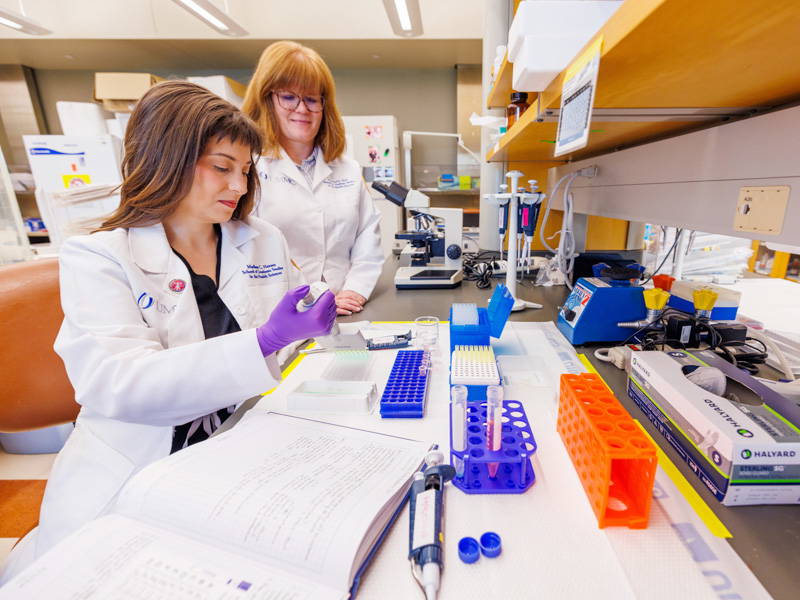
MD-PhD student Madison Hansen, left, conducts laboratory research alongside her mentor, Dr. Erin Taylor, assistant professor of physiology and biophysics.
UMMC students can pursue one of 10 SGSHS PhD programs: biomedical sciences; biomedical materials sciences; cancer biology and therapeutics; cell and molecular biology; clinical anatomy; experimental therapeutics and pharmacology; microbiology and immunology; neuroscience; nursing; and physiology and biophysics.
Students work with program leaders to select a research home aligned with their interests and long-term goals.
UMMC’s investment helps make that lengthy training possible. The program provides stipend and tuition support throughout the traditional seven-year training period, along with resources for research travel, professional development, mentorship and preparation for competitive research fellowships.
Ultimately, Speed said the program’s success will not be measured by the MSTP designation alone. It will be measured by the physician-scientists UMMC produces, the discoveries they make and the patients and communities their work ultimately serves.
Speed credited the program’s leadership structure. Co-directors Dr. Sarah Sterling, professor of emergency medicine, and Dr. Licy Yanes Cardozo, professor of pharmacology and toxicology, are clinician-scientists who help provide mentorship and continuity during students’ medical training. They keep trainees connected to both scientific research and clinical care throughout the program.
Beyond leadership, the application for MSTP designation required UMMC to document the many components of its physician-scientist training environment, including its educational structure, research opportunities, clinical training, mentoring framework, institutional commitment, trainee outcomes and plans for continued evaluation and improvement. Speed’s role was to bring those elements together and demonstrate UMMC’s ability to train the next generation of physician-scientists.
Perhaps most telling, Speed said, was what UMMC did not have to do to become competitive.
“We did not have to redesign our educational programs to meet MSTP expectations,” he said. “Instead, our task was to clearly demonstrate the exceptional quality of training, mentorship, research opportunities and institutional support already in place at UMMC.”
UMMC’s proposal also highlighted something that cannot be replicated elsewhere: Mississippi itself.
As the state’s only academic health science center, UMMC cares for patients from both urban and rural communities, including many with complex illnesses, advanced disease and significant health disparities.
The state faces some of the nation’s most persistent health challenges, including high rates of cardiovascular disease and obesity. Socioeconomic conditions and Mississippi’s large rural population can further affect access to nutritious food, safe housing, education and health care. Those realities helped form a central rationale for building the MSTP.
“Mississippi offers a uniquely valuable clinical and research environment,” Speed said. “This exposure enables trainees to identify consequential clinical questions and investigate solutions that can improve health in Mississippi and other underserved communities.”