

By Nathan Duff, Delta State University
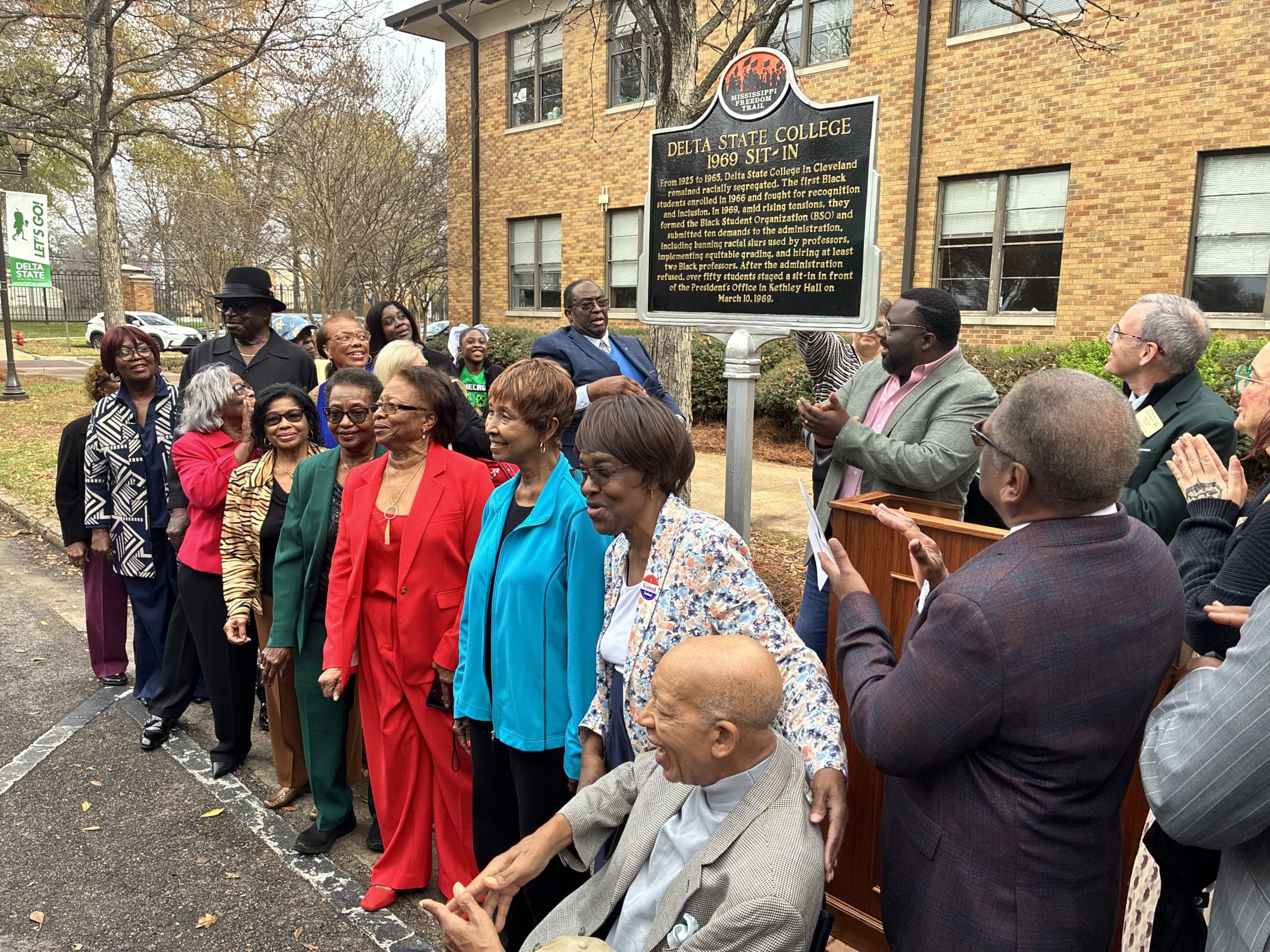
Participants in the 1969 sit-in by members of Delta State’s Black Students Organization joined campus and community leaders to unveil the Freedom Trail Marker commemorating their historic actions.
Delta State University formally unveiled a Mississippi Freedom Trail marker on March 10 commemorating the 1969 student sit-in, a pivotal moment in the university’s history and in the broader Civil Rights Movement in the Mississippi Delta.
The ceremony, held in front of Kethley Hall on the 57th anniversary of the demonstration, brought together students, alumni, community members and several participants from the original sit-in to recognize the legacy of the students whose actions helped shape the university’s path forward. A reception hosted by the Delta Center for Culture and Learning followed in the lobby of Ewing Hall.
In February 1969, members of the Black Student Organization (BSO) presented university leadership with a list of ten demands addressing concerns that included the need for Black faculty and counselors, fair grading practices, an end to racial slurs in the classroom and greater academic and cultural representation on campus. When students believed their concerns were not being adequately addressed, they organized a peaceful sit-in at Kethley Hall, then the university’s administration building. On March 10, 1969, 52 students were arrested following the demonstration and transported to the Mississippi State Penitentiary at Parchman, where they were held overnight. The event became one of the most significant civil rights moments in Delta State’s history and remains a defining chapter in the institution’s ongoing journey toward greater inclusion and equity.
DSU President Dr. Daniel J. Ennis opened the program by welcoming all of the guests to campus, saying, “I hope that every leader of Delta State is always held to account, and when they need to do things differently and think differently and act differently, that there are wise and brave students and faculty and staff to call them to account and to remind them of their duty to the university, to the state of Mississippi, and to our country. So I welcome you to this wonderful day on this campus, and I thank those who made it possible for being here today.”
Director of the Delta Center Dr. Mandy Truman thanked the participants with whom she worked to bring the marker to campus. She said, “I had the opportunity to meet with several of the participants so that we could discuss the marker and put together the narrative that would be shared. I got to sit back and just hear these ladies share their history, share their memories, and kind of piece together this history again. I just want to thank y’ all for taking the time to come to my office that day.”
Remarks followed from Mississippi Department of Transportation, Central District Commissioner Willie Simmons. Simmons, a DSU alumnus and former commencement speaker, cited the many people both on campus and off who moved the Civil Rights struggle forward. He said, “Thanks to you all for what you did in the late 1960s, and today, Delta State University, we are proud to say, has some 3,000 students and approximately 45% of those are Black. Has 300 staff persons and approximately 45% of those are Black. So, thank you for your commitment, for your challenges and what you did that allowed us to be who we are today.”
Kammie Carpenter of Visit Mississippi spoke to the importance of the Freedom Trail Markers. She said, “The Mississippi Freedom Trail exists to ensure that the stories of courage, conviction and the pursuit of justice across our state are never forgotten. Each marker tells a story that shaped not only Mississippi, but our nation. When the first black students enrolled in 1966, they did more than attend classes. They stepped onto campus with courage, determination and a vision for a more equitable future.”
Georgene Clark, Assistant Professor Emeritus of English and the first Black faculty member hired by Delta State, shared her profound personal connection with the students from the sit-in. She said, “We’re here and we’re recognizing and celebrating what these courageous young students did in 1969. And we’re here to say thank you. I’m especially here because it’s upon their shoulders that I stood when I came in 1976. It was because of their courage, their perseverance, their persistence, their determination and their bravery in a time that was so volatile, in a time when it was dangerous, literally, for them to even say anything, let alone do something.”
Sit-in participant Maggie Crawford called the other participants from the sit-in who were in attendance to stand and be recognized and related a message from a participant who was unable to attend the event. She said, “We had about 80 plus (BSO) students, but we had 52 that participated in the sit-in. Some were not able to be here today, others have come from the north, the south, the east and the west, some of us coming in wheelchairs, but we are here. And I want to just mention one person that’s not here, and if anybody deserves to be here, it’s this one person. Her name is Joanne Anderson Wynne. Joanne participated, and she was a newly wedded person, and she was pregnant at the time, and she lost her baby in this struggle. So, I’d like to just say her name. Will you say it with me? Joanne Anderson. Joanne Anderson.”
John Spann, Director of Strategic Initiatives for the Mississippi Humanities Council closed the program and invited the sit-in participants to stand before the marker as it was unveiled. He said, “We know that these young individuals that made this protest happen in 69 inspired other protests, other student protests, like in 1970 at the University of Mississippi. We know that didn’t happen in a vacuum. That happened because folks made the effort right here on Delta State’s campus to make a change.”
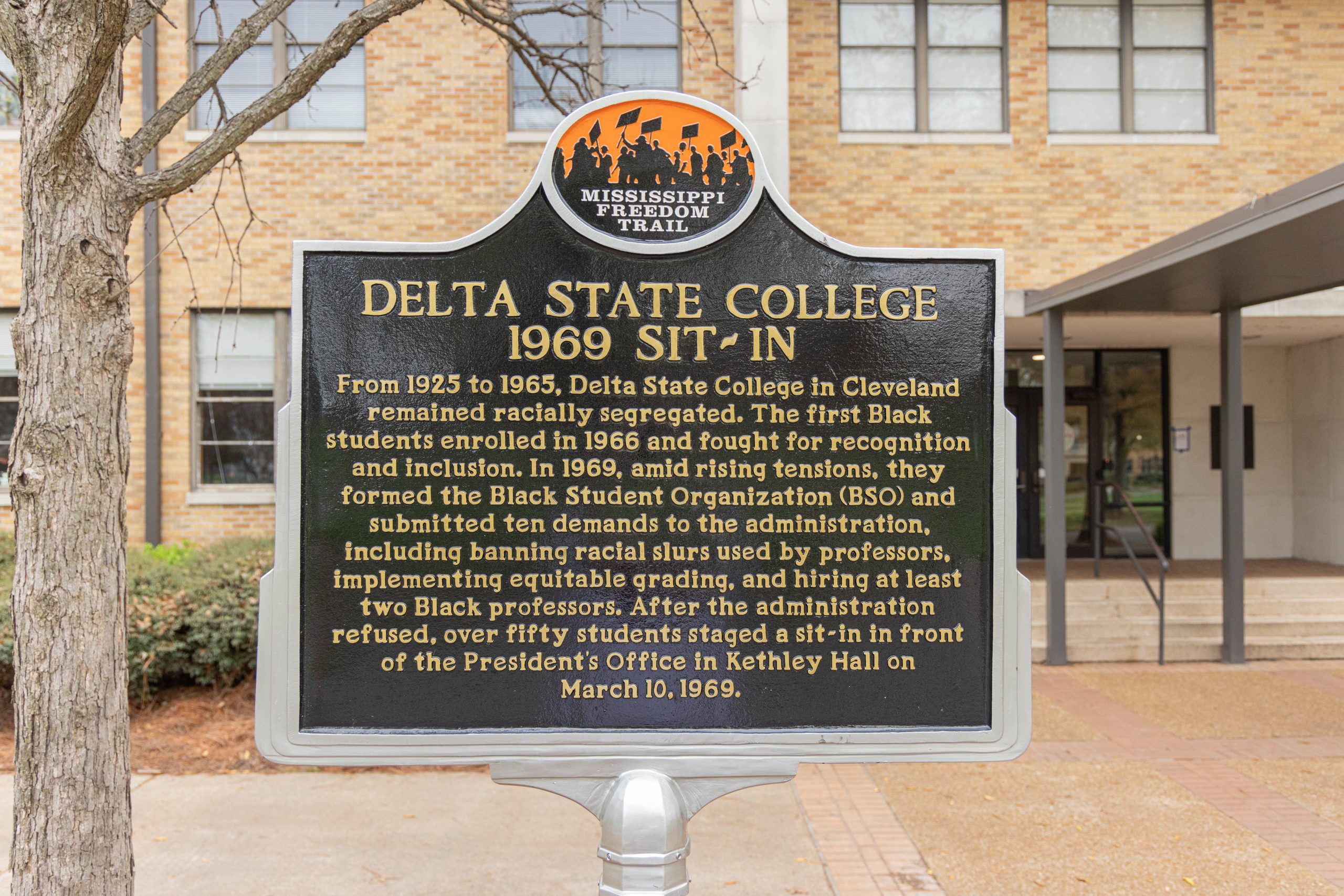
The new Mississippi Freedom Trail marker honoring the participants in the 1969 sit-in stands outside Kethley Hall on the DSU campus where it is easily accessible
The Mississippi Freedom Trail marker now stands in front of Kethley Hall as a permanent recognition of the students whose courage helped shape Delta State’s history. For more information about the Mississippi Freedom Trail, visit www.mississippimarkers.com/civil-rights.html.