
By: Ashby Foote
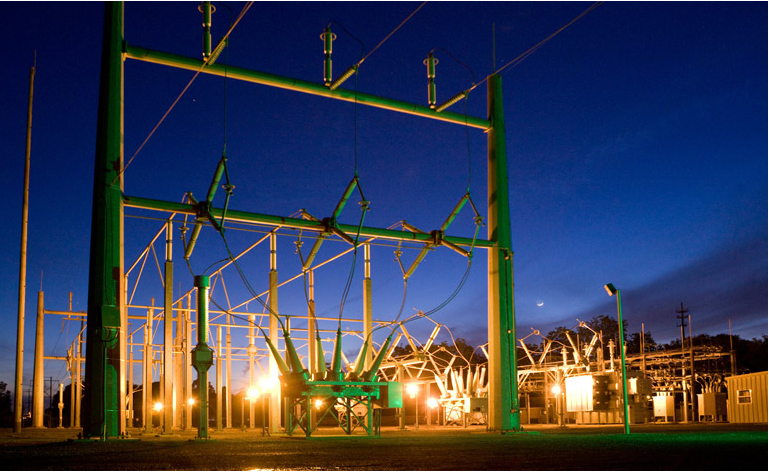
(Photo courtesy of Bigger Pie Forum website)
Hold my ampere and read this! The next three years are going to be electrifying! Why? Turn on the financial news today and all you hear is AI (artificial intelligence) this and AI that. AI must be the next BIG THING! Some think it will be the BIGGEST THING ever. It’s the elephant in the room that nobody can stop talking about. Watt could go wrong?
AI is certainly the rage with the tech tycoons who run the world’s most valuable companies, the Magnificent 7 (Apple, Microsoft, Amazon, Google, Meta, Tesla and Nvidia). These very smart tycoon billionaires are betting big bucks to make AI happen – $650 billion so far with much more to come. Most of that money is dedicated to the AI hyper-scale data centers that are popping up across the country. It is the Mag 7’s money to invest but the catch for the rest of us is, ‘AI is the most energy intensive form of compute ever invented’.
The leap from a simple internet search to asking an AI agent like ChatGPT, Copilot or Gemini to compose poetry or songs or finish your homework assignment requires massively more compute which uses massively more electricity. The new surging demand for electricity from AI datacenters is far beyond the capacity of America’s current electric grid. Because of that electricity, has now become the critical component in America’s race for AI dominance.
Access to electricity is often taken for granted. It was the next BIG THING when Edison built the first electricity generation power plant 140 years ago and it is now a necessary and organizing feature of civilization. With AI knocking on the door a good framework for understanding the electric grid is helpful. From 50,000 feet, America’s grid, which includes generation, transmission and distribution is best understood as one of the biggest if not the biggest machine in the world.
This big machine has trillions of nodes, billions of parts, covers 3.1 million square miles and serves over 325 million people and businesses with reliable on demand electricity. That is no small feat. The big machine has many masters – public utilities, co-ops, hundreds of elected and appointed regulators at the state and federal levels and most importantly the rate payers who pick up the tab. That size, scope and disparate oversite creates an inertia that is hard to budge.
Now coming to this biggest of machines is the empire of AI and its fleet of hyperscale datacenters thirsty for electricity by the gigawatt. Electricity demand has been flat the past 15 years but that is changing in a hurry primarily due to AI. Over the next 5 years electricity usage is expected to grow 32% (5.7% annualized), and to prevent brownouts and blackouts Peak Capacity needs to grow 20% (3.7% annualized). That is the highest rate since the 1960’s when refrigerated air conditioning spurred electricity growth of 7.4% annually.
The predicted AI datacenter fleet demand is 90 gigawatts, a huge project in just 5 years. So, what is a gigawatt? One gigawatt is enough to serve a city of 500,000. 90 gigawatts is the equivalent of adding 45 new cities of a million people each.
In a presentation this past November Eric Schmidt, retired CEO of Google, confirmed the dire and scary nature of our predicament with these words, “the country is on its way to running out of electricity in 2028… provisioning electricity is much slower than provisioning compute… It is the scarce resource of this time.”
We are witnessing a clash of cultures between digital disruptors used to moving fast and breaking things and the methodical and bureaucratic regulators anxious to maintain stability and not make mistakes.
There is also a clash of supply chains with the digital supply chain outpacing the industrial supply chains that support the Big Machine. Those supply chains are already creaking from the surging demand to meet AI’s voracious appetite for more power. Combined cycle plants that burn natural gas are the best solution to quickly add capacity but the major suppliers of the turbines at the heart of those plants are already back-ordered through 2030. High voltage transmission supply chains are also facing bottlenecks for transformers and other key components. D.O.E. wants 5000 miles of high voltage transmission built annually and only 828 miles were built in 2024.
Action is needed and right away if a calamity is to be avoided in 2028 or beyond. Expanding the capacity of the world’s biggest machine by 20% in just 5 years is a daunting challenge. This is the ‘provisioning of electricity’ Eric Schmidt warned us about. Action should compel permitting reform and behind the meter solutions for some of the AI datacenters – BYOC (Bring Your Own Capacity). It should include extending the lives of coal and natural gas plants set to retire and perhaps bringing closed nuclear plants out of retirement. And it will require lots and lots of money and serious discussion on who picks up the tab. If we don’t get electricity right civilization will falter.