
By Meredith Biesinger, Magnolia Tribune
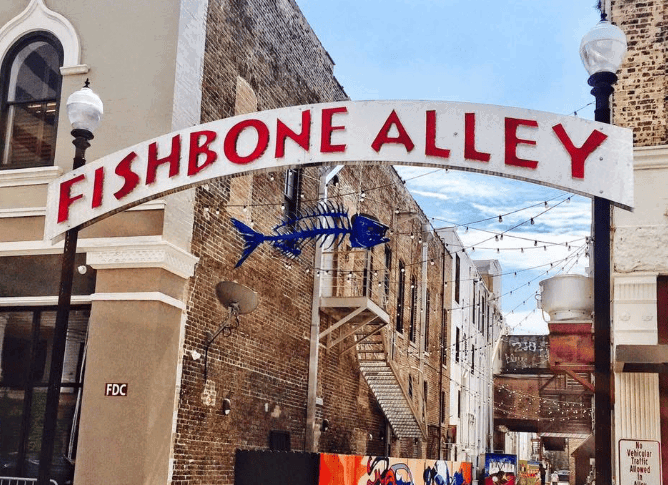
(Photo from Fishbone Alley)
Some places in Mississippi announce themselves with giant signs and roadside billboards.
Others are a little harder to find.
Fishbone Alley in downtown Gulfport falls firmly into that second category.
Tucked quietly into the middle of a city block in Gulfport’s historic downtown district, this colorful little corridor has become one of the Coast’s most unexpected treasures. If you weren’t looking for it, you could easily walk right past it without realizing one of Mississippi’s most creative spaces is hiding just beyond the street.
Honestly, that feels very Mississippi.
Some of our best places are the ones you discover almost by accident.
Fishbone Alley stretches just one block between 13th and 14th Streets and 26th and 27th Avenues, but somehow it feels much larger than that. The walls are covered with murals, painted panels, artistic shutters, and installations created by Coast artists invited to leave their mark on the space.
The result is an outdoor gallery that feels alive and constantly changing.
Visit in one month, and you may notice a mural you somehow missed before. Come back later, and there may be something entirely new waiting around the corner. The alley evolves with the community, which gives every visit a slightly different feel.
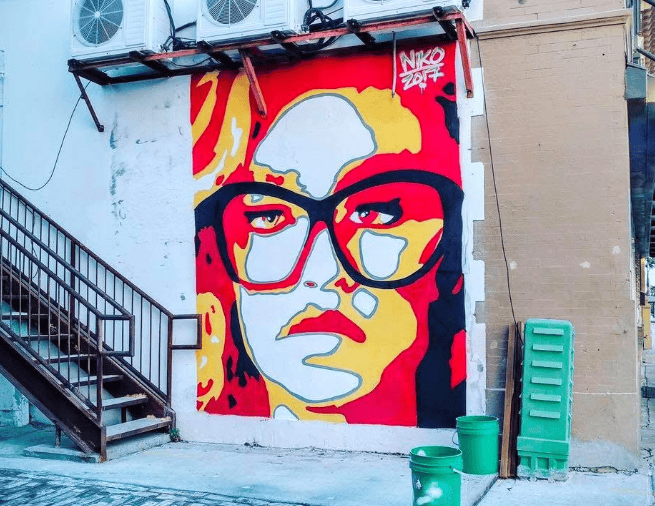
Of course, Fishbone Alley wasn’t always one of Gulfport’s favorite photo spots.
For years, it was exactly what you would expect an alley to be: a practical space used for deliveries, dumpsters, and all the behind-the-scenes work that keeps a downtown district running smoothly.
Then came Hurricane Katrina.
Like much of downtown Gulfport, the buildings and infrastructure surrounding the alley suffered tremendous damage in 2005. As rebuilding efforts moved forward in the years that followed, workers removing old asphalt made an unexpected discovery beneath the surface: brick pavers dating back to the early twentieth century.
Instead of covering them back up, Gulfport decided to build something new around something old.
Those historic bricks became part of a larger effort to revitalize downtown while preserving a visible connection to the city’s past. In 2016, Fishbone Alley officially emerged as a public art project and community gathering space, helping transform an overlooked corner of downtown into one of its most recognizable destinations.
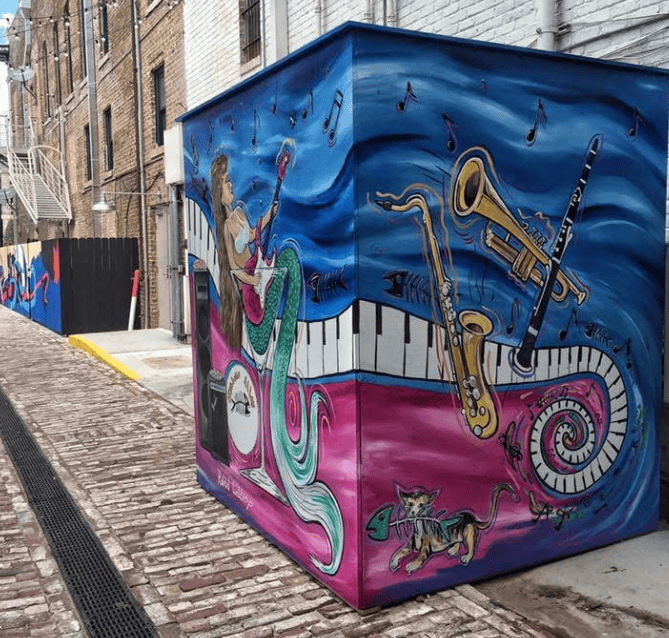
Today, visitors still walk across those same historic pavers while surrounded by some of the Coast’s most colorful artwork.
That’s a pretty good metaphor for Mississippi if you think about it.
We tend to value where we’ve been while keeping an eye on where we’re going.
One of the alley’s most recognizable pieces is a massive octopus mural stretching across an entire wall, but half the fun of Fishbone Alley is discovering the smaller details tucked between the larger works. There is color around nearly every corner, and the closer you look, the more you notice.
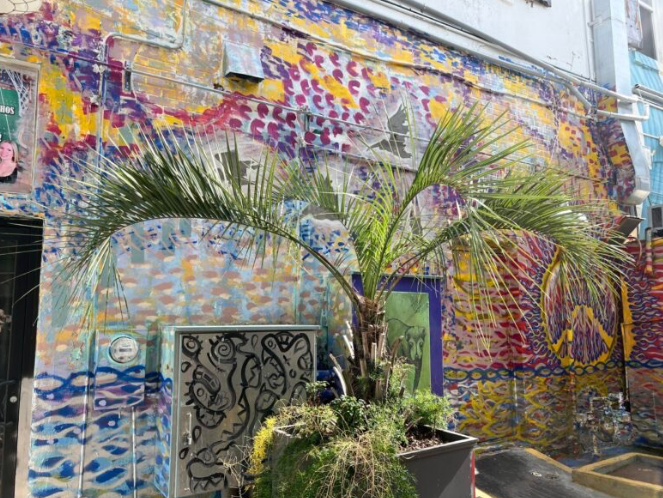
Fishbone Alley rewards curiosity.
It invites visitors to slow down for a few minutes, look up from their phones, and actually pay attention to the details around them.
That feels increasingly rare these days.
The alley also opens onto Hancock Whitney’s Lighthouse Park, a welcoming green space that reinforces the sense that this isn’t simply a place people pass through. It’s a place people gather.
Spend a few minutes there, and you’ll understand why locals are so proud of it.
And since we’re in the middle of the Christmas in July season, movie fans may recognize Fishbone Alley from the holiday film Christmas in Mississippi, which was filmed along the Coast. It is a fun little piece of trivia and another reminder that Mississippi’s film industry has quietly left its mark in places people might not expect.

What I appreciate most about Fishbone Alley is that it tells a larger Mississippi story.
It is a story of creativity.
A story of resilience.
A story about finding opportunity in places that others may have overlooked.
After Katrina, Gulfport could have simply rebuilt what was there before. Instead, the city created something entirely new while preserving pieces of the old.
That balance feels distinctly Mississippi to me. We honor our history, but we’re not stuck in it.
And maybe that’s why Fishbone Alley resonates with so many people.
Because at the end of the day, it isn’t really about murals or brick streets or photo opportunities. It’s about reinvention and community. It’s about taking an ordinary alley and turning it into something memorable.
If that isn’t a Mississippi story, I don’t know what is.