
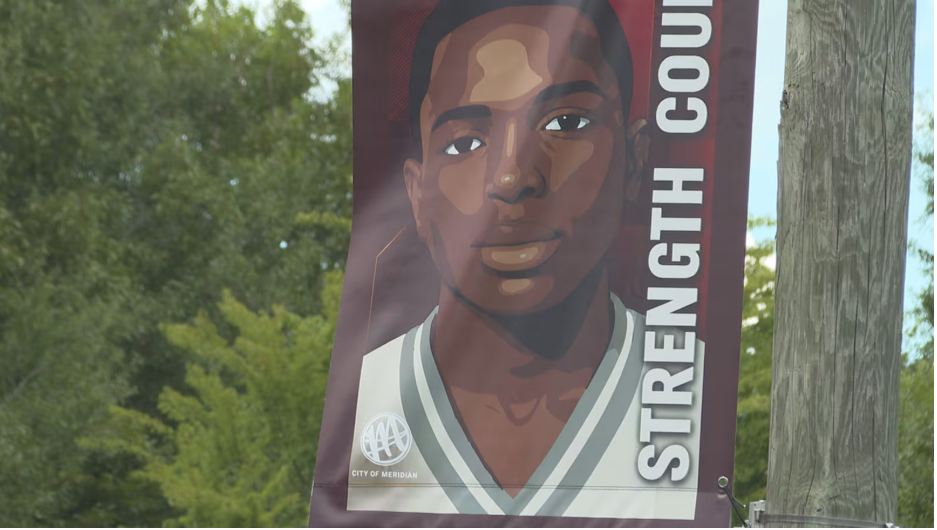
New commemorative banners are now on display in Meridian honoring the life and sacrifice of civil rights worker James Chaney, a Meridian native who was murdered during Freedom Summer in 1964.
Community members gathered Tuesday for a ceremony marking the installation of the banners, which are displayed at James Chaney Park and along James Chaney Drive from Interstate 20 to Eighth Street.
Chaney, 21, was murdered alongside fellow civil rights workers Michael Schwerner and Andrew Goodman while working to advance voting rights and civil rights in Mississippi. Their deaths became one of the defining events of the civil rights movement.
The new banners recognize Chaney’s legacy in his hometown while drawing attention to locations connected to Meridian’s civil rights history. The ceremony was held as the city continues efforts to preserve and highlight sites that are part of Meridian’s civil rights historical trail.
Members of Chaney’s family were among those attending the ceremony, including his granddaughter, Jamie Lewis, who described the recognition as a full-circle moment for her family.
“This is bigger than me. This is bigger than anything that I could have dreamed of,” Lewis said. “To grow up and to get more knowledge and understanding and be an adult and realize that these are actual events that actually happened. It just puts everything kind of into motion for me to see that this is full circle.”
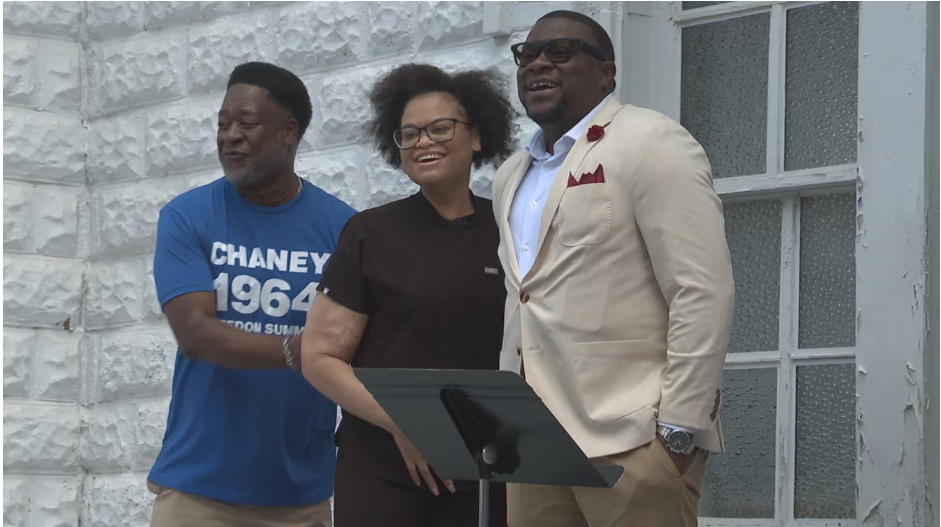
Chaney’s grandson, Jerry McCoy, said the banners also serve as a reminder of the importance of voting and the sacrifices made by those who fought to secure voting rights.
“This today lets you know that it does matter,” McCoy said. “The fact that they’re recognizing my grandfather who gave his life for people to have the right to vote. He was actively trying to register people in Philadelphia, Mississippi, when he lost his life. So your voice does count and it does matter.”
Chaney, Schwerner and Goodman disappeared June 21, 1964, in Neshoba County while investigating the burning of a Black church near Philadelphia. Their bodies were discovered weeks later.
More than six decades later, Chaney’s name remains prominently connected to his hometown through James Chaney Park and James Chaney Drive. The addition of the commemorative banners provides another visible reminder of his role in Mississippi and American civil rights history.